
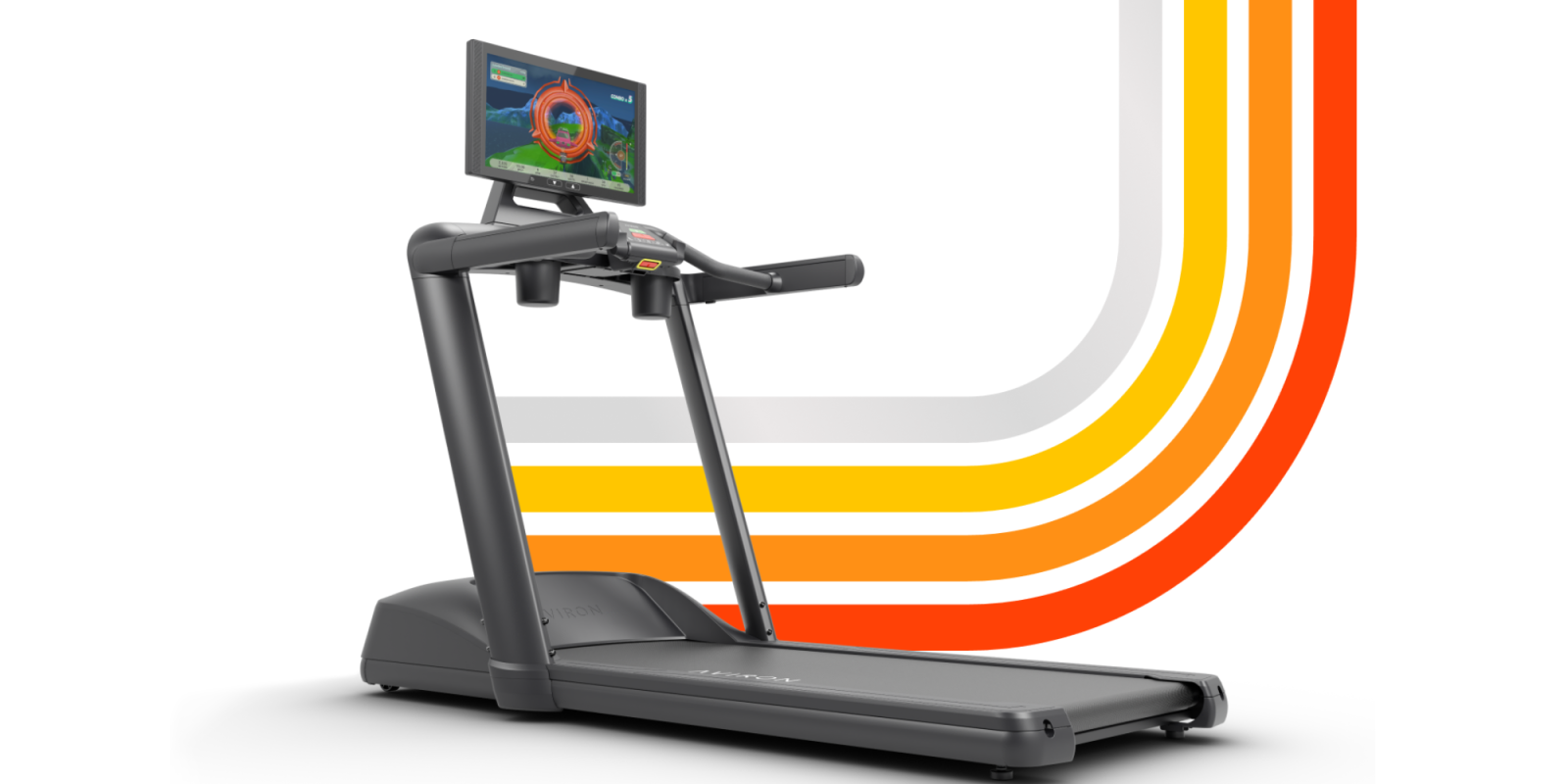
I’ve worked in connected fitness for years, and the hardest part of any cardio routine isn’t the physical effort, it’s showing up consistently. Most treadmills become expensive coat racks within weeks because staring at a wall while running in place requires an unsustainable amount of willpower.
The Aviron Victory Treadmill takes a different approach. Instead of relying on your discipline to power through boring workouts, it keeps you engaged through gaming, competition, and extensive workout variety. At $2,999, it’s positioned as a premium solution to the adherence problem that plagues home cardio equipment.
I’ve been testing the Victory for the past few weeks, putting in over 30 miles across different workout types. Here’s my full breakdown of what works, what doesn’t, and whether this investment solves the consistency problem it promises to fix.
What is the Aviron Victory Treadmill?
The Aviron Victory is a connected treadmill built around engagement rather than just performance metrics. You get a 22-inch HD touchscreen, access to over 1,000 workouts, and gaming integration where your speed and incline control games, racing opponents, hitting rhythm beats, and competing on leaderboards.
Key specs:
- 3.5 continuous horsepower motor
- Max speed: 12.5 mph (4:48 mile pace)
- Incline range: 0-12%
- 22-inch HD touchscreen
- Footprint: 6.5 feet long x 3 feet wide
- Not foldable
- $29/month subscription required for full platform access
Hardware and build quality
Motor and performance
The 3.5 continuous horsepower motor handles walking, jogging, and running smoothly. Max speed of 12.5 mph covers sprint intervals for most people’s training needs.
Speed transitions are responsive, when you’re doing interval work and switching between paces, the belt adjusts quickly without jerking. That responsiveness matters when you’re following trainer cues or reacting to game dynamics.
Deck and cushioning
The deck has built-in cushioning that’s noticeably softer than running outside. After 30+ miles of testing, my knees feel better post-run compared to outdoor pavement running. If you’re doing high-volume training or have joint concerns, that cushioning compounds over time.
Incline
Incline adjusts from 0 to 12% via touchscreen or handle controls. The motor is quiet and transitions are smooth, no jerky movements when adjusting mid-workout.
Build quality and space requirements
The frame is stable. Minimal screen wobble when running at higher speeds. The handrails are solid, and the overall construction feels commercial-grade rather than flimsy home equipment.
One note: Some reviews mention the screen wobbles slightly at high speeds. I’ve noticed it, it’s there, but it’s not concerning or distracting. Doesn’t affect workout quality or usability.
Footprint is 6.5 feet long by 3 feet wide. This is a full-size treadmill with no folding mechanism. You need dedicated space, it stays out permanently. Make sure you have the room before ordering.
Screen and interface
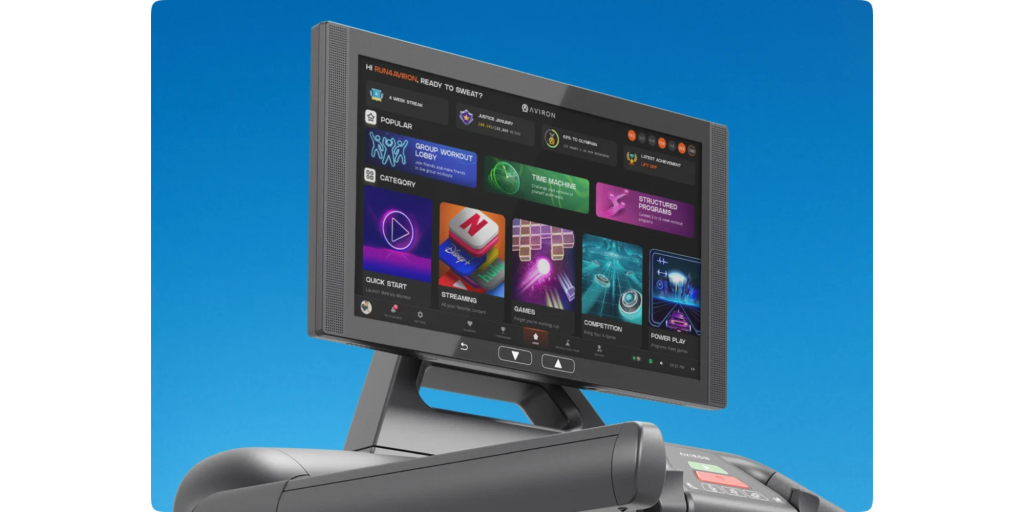
The 22-inch HD touchscreen is bright, responsive, and lag-free. Touch sensitivity is excellent, no frustration when navigating menus mid-run.
The interface is intuitive. Categories are clearly labeled: workouts, games, metrics, settings. If you’ve used a smartphone, you’ll figure this out immediately.
Screen angle and size work well whether you’re walking or running, everything is easy to see and read from your natural position.
Software and workout library
Subscription model
The platform requires a $29 monthly subscription ($348/year). This unlocks:
- 1,000+ workouts
- All gaming features
- Trainer-led classes
- Scenic runs
- Interval programs
- Workout history and progress tracking
Without the subscription, you get basic manual mode. You can still use the treadmill, but you lose access to all the content. The value proposition depends entirely on using the platform, so factor that ongoing cost into your decision.
Trainer-led classes
Structured workouts with warm-up, working intervals, and cool-down. Trainers cue speed and incline changes throughout, clear timing with enough warning to adjust smoothly.
These work well if you want structure without programming your own workout. Show up and follow along.
Scenic runs
Virtual runs through global locations: Iceland, Swiss Alps, coastal routes. Your running speed controls how fast you move through the scenery.
Good for recovery days or when you want something chill. The visuals are immersive enough to keep you engaged without requiring intense focus.
Gaming features: the main differentiator
This is where Aviron separates itself. You control games through your movement, speed and incline become your controllers.
How it works:
- Racing games: Your speed determines character speed. Speed up to pass opponents, slow down and you fall behind
- Rhythm games: Hit beats by matching your pace and incline
- Puzzle elements: Different intensities based on game type
- Incline controls elevation changes or jumps depending on the game
Competitive features:
- Leaderboards
- Race against AI or real people
- Challenge friends
- Track performance over time
Why this matters: It shifts your mental focus. Instead of watching the clock and counting minutes, you’re focused on the game. Your brain engages with competition rather than counting down the workout. When you’re trying to beat your last score or pass an opponent, you forget you’re tired.
From a training perspective, this solves the engagement problem that makes people quit cardio. The gaming isn’t a gimmick, it works to keep you coming back.
Graphics expectation management: The graphics are functional and engaging, but not console-quality. If you’re expecting PlayStation-level visuals, adjust expectations. They do the job of keeping your brain occupied, which is what matters.
Metrics and tracking
Standard metrics: speed, distance, time, calories. Heart rate tracking via Bluetooth-connected monitor.
The tracking is solid but not ultra-detailed. If you want advanced running analytics (cadence, stride length, ground contact time), pair this with a running watch. For most people, these metrics are sufficient.
Workout history saves automatically. You can track progress over time and monitor improvements, important for staying motivated when you see you’re running faster or longer than before.
My experience with the Victory
I’ve been testing this for several weeks, using it three to four times per week for various workout types. As someone who’s worked in the connected fitness space and tested dozens of cardio machines, I’ve become particular about separating marketing hype from features that drive behavior change.
Setup and integration
The interface is straightforward enough that I don’t need to pull out my phone every time I want to start a workout. The OLED display makes switching between games, classes, and scenic runs simple mid-session.
Gaming performance in practice
The gaming works. I was skeptical. I’ve seen plenty of gimmicky fitness tech over the years. But when you’re mid-race trying to beat your score, you forget you’re tired. The competitive element creates external accountability that fills in motivation gaps.
I typically alternate between gaming sessions and trainer-led interval classes. Some days I want structured training, other days I want the distraction of competition. Having both options prevents the monotony that usually makes me quit cardio equipment.
Variety and engagement
The workout library depth matters more than I expected. With 1,000+ options, I’m not repeating the same content week after week. The scenic runs work well for active recovery days when I want lower intensity but still want visual engagement.
Practical considerations
The subscription dependency is real. Without the $29/month platform access, you have an expensive treadmill with a big screen. The value equation only works if you’re using the content consistently.
The space commitment is non-negotiable. At 6.5 feet long with no folding capability, this needs a permanent home. I have dedicated gym space, so this wasn’t an issue for me, but it’s a legitimate constraint for people with limited room.
How it compares
From an industry perspective, the engagement features are the best I’ve seen for home cardio. The gaming integration is more sophisticated than competitors, and the variety in workout types prevents the burnout that typically happens with connected fitness platforms.
Is the Victory worth the investment?
The gaming integration addresses a real problem: cardio equipment adherence. The hardware performs well, the software keeps you engaged, and the variety prevents burnout.
The main consideration is the total cost of ownership. At $2,999 plus $348/year subscription, you’re looking at $3,347 in year one and $348 annually thereafter. That’s premium pricing that only makes sense if the engagement features improve your consistency.
The value equation comes down to your specific situation. If you’ve bought cardio equipment before that became furniture, if you respond to competition and gamification, and if you have the space for a permanent setup, the Victory delivers on its promises.
Whether that justifies the premium pricing depends on how much you value solving the adherence problem versus just having cardio capability.
The bigger picture for connected fitness
This launch signals where the industry is heading: toward solving behavioral problems rather than just adding hardware features. Aviron has been smart about focusing on engagement mechanics that drive consistency rather than cramming every possible metric into the interface.
The gaming integration is particularly interesting because it shows understanding of what makes people quit versus what keeps them coming back. Most companies either go minimal on content or try to replicate gym classes at home. Aviron found a middle ground that makes psychological sense.
Bottom line
The Aviron Victory represents a solution to the cardio adherence problem. The gaming features are meaningful, the workout variety prevents burnout, and the hardware performs reliably.
Additional practical details worth noting:
- 1,000+ workouts included with subscription
- Works for walking, jogging, and running
- Gaming doesn’t require app dependency beyond initial setup
- Commercial-grade build quality at home equipment price point
At $2,999 plus subscription, you’re paying premium pricing, but you’re getting engagement mechanics that solve the problem with home cardio: consistency. For people who struggle with cardio adherence and have the space, this could be worth the investment.
The best cardio equipment is the one you’ll use consistently. The Aviron Victory solves that equation for home treadmills.
Suggested Articles:
- Aviron Fit Bike review – better than Peloton?
- Hydrow announces new Arc Rower
- STEPR opens community equity round after $25M in sales and retail expansion


FTC: We use income earning auto affiliate links. More.
